
Fiberglass pultruded profiles have increasingly established themselves as a highly efficient alternative to conventional materials in applications that require mechanical strength, durability, light weight, and low maintenance costs over the structure’s service life.
Used in a variety of industrial, electrical, chemical, and infrastructure sectors, these components offer superior performance in environments where materials such as steel, aluminum, and wood have limitations related to corrosion, wear, or the constant need for maintenance.
What Are Pultruded Profiles?
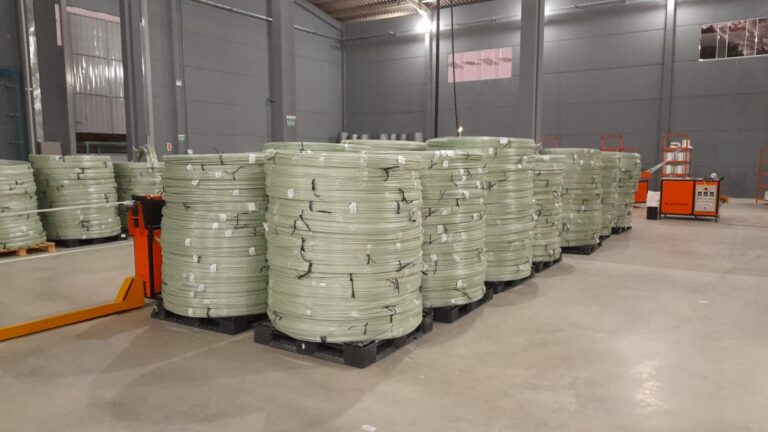
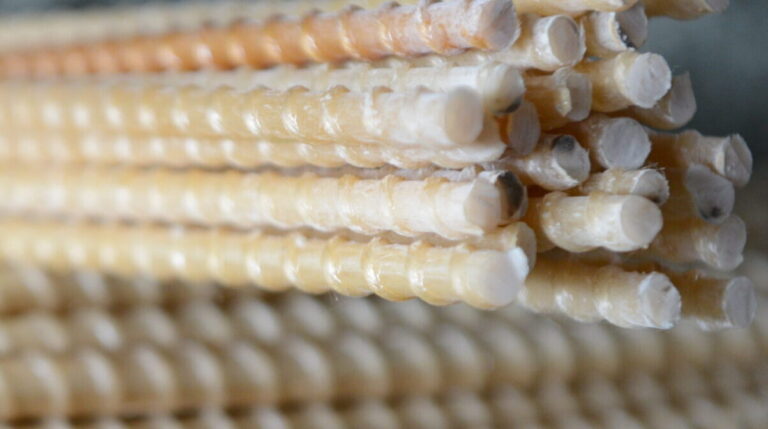
Pultruded profiles are structures manufactured from a combination of continuous glass fibers and thermosetting resins, produced using the pultrusion process.
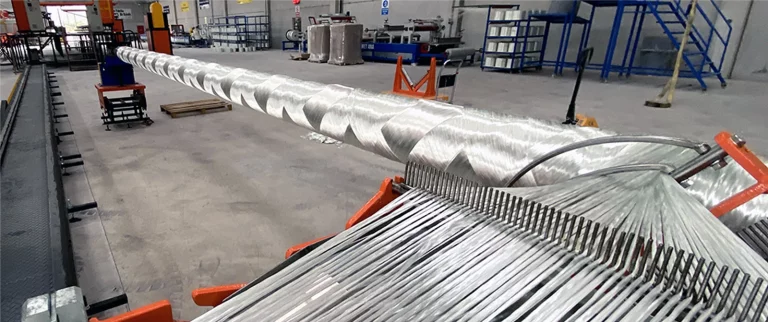
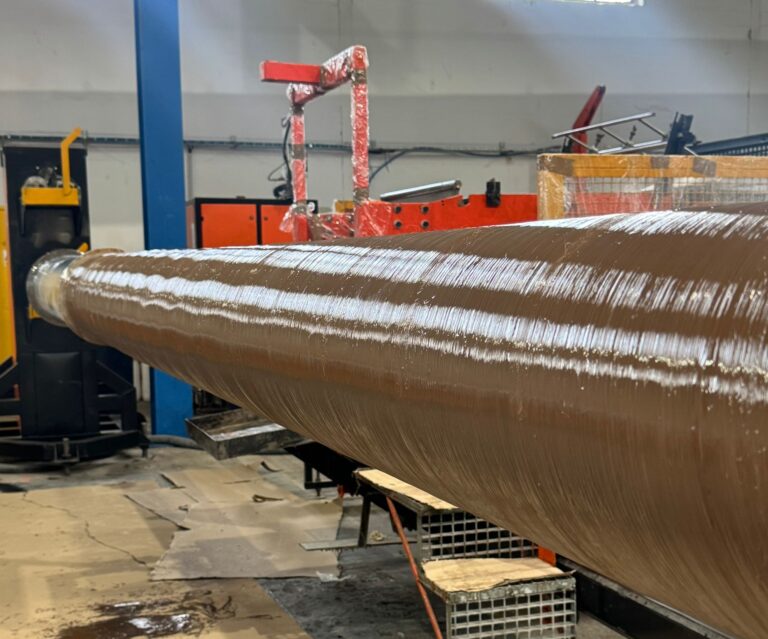
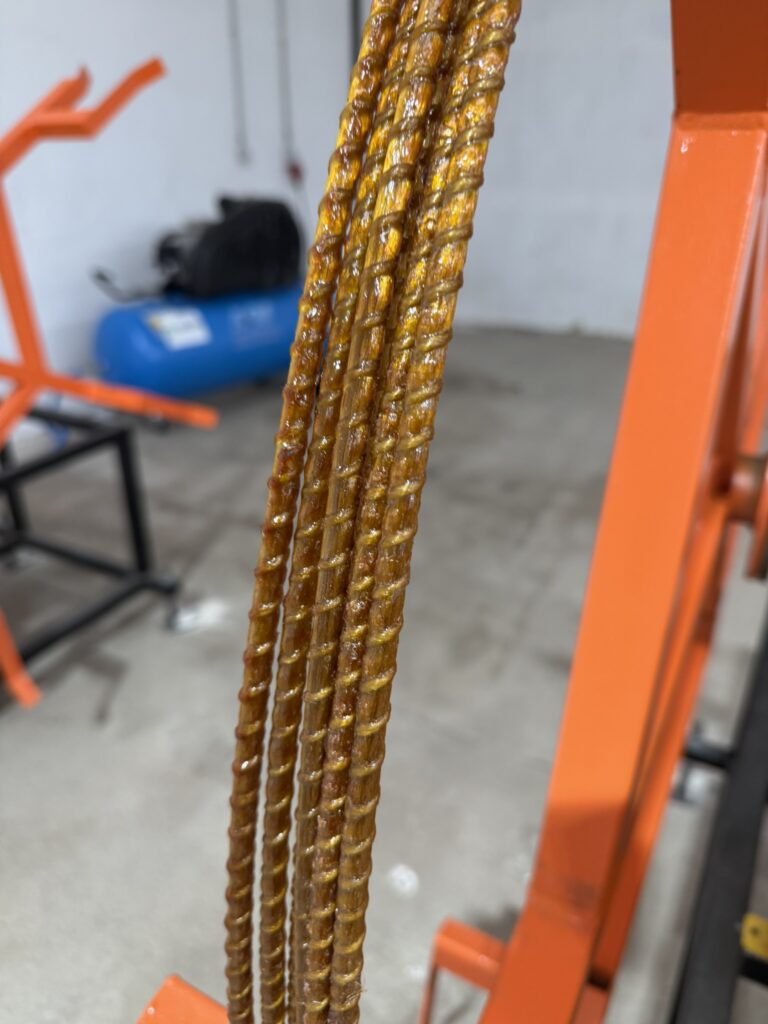
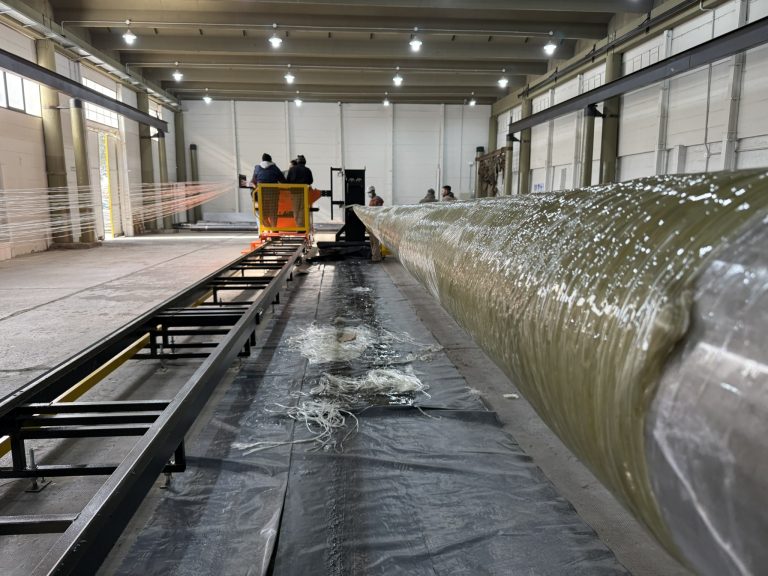
In this process, the fibers are continuously impregnated with resin and pulled through a heated mold, where the material cures and the part takes on its final shape.
The result is a profile with high dimensional uniformity, an excellent surface finish, and consistent mechanical properties along its entire length.
Unlike conventional manufacturing processes, pultrusion enables continuous production, high repeatability, and excellent utilization of raw materials, making it one of the most efficient technologies for manufacturing structural composite components.
Main Applications of Pultruded Profiles
Thanks to their versatility, fiberglass profiles are used in a variety of industrial and infrastructure sectors, including:
- Crossarms for power distribution networks;
- Industrial and marine ladders;
- Guardrails and handrails;
- Technical walkways;
- Industrial gratings and flooring;
- Structures for electrical substations;
- Maintenance platforms;
- Structural supports;
- Telecommunications towers and structures;
- Chemical and highly corrosive environments;
- Water and wastewater treatment plants;
- Offshore and maritime facilities.
Advantages of Pultruded Fiberglass Profiles
High Mechanical Strength
Pultruded profiles offer an excellent strength-to-weight ratio, withstanding high structural loads without compromising the integrity of the part.
This feature enables more efficient and safer designs, with a significant reduction in the structure's total weight.
Corrosion Resistance
One of the greatest advantages of fiberglass is its natural resistance to corrosion.
While metal structures require periodic painting, galvanizing, or other treatments, pultruded profiles retain their properties even when exposed to:
- Harsh chemicals;
- Constant humidity;
- Saline environments;
- UV radiation;
- Severe weather.
Low Maintenance
The combination of chemical resistance, dimensional stability, and durability results in structures that require fewer repairs and replacements.
This reduces operating costs and increases the predictability of investments throughout the project's life cycle.
Electrical Insulation
Unlike metals, fiberglass does not conduct electricity.
For this reason, these profiles are widely used in applications related to the electrical and energy sectors, contributing to the operational safety of equipment and personnel.
Lightweight and Easy to Install
Pultruded profiles can be significantly lighter than steel, making them easier to transport, handle, and assemble on site.
In addition, reducing weight can lower logistics costs and simplify installation processes.
Pultruded Profiles vs. Metal Structures
Although steel continues to be widely used in structural projects, its use can pose challenges in harsh environments.
Exposure to corrosion often requires surface treatments, repainting, and periodic maintenance, which increases costs over the years.
Pultruded profiles, on the other hand, offer a highly durable solution with excellent chemical resistance and a reduced need for corrective measures.
In many projects, a total cost of ownership analysis shows that composites can offer significant economic advantages compared to traditional materials.
How Industrial Pultrusion Works
The quality of the final profile depends directly on the efficiency of the production process.
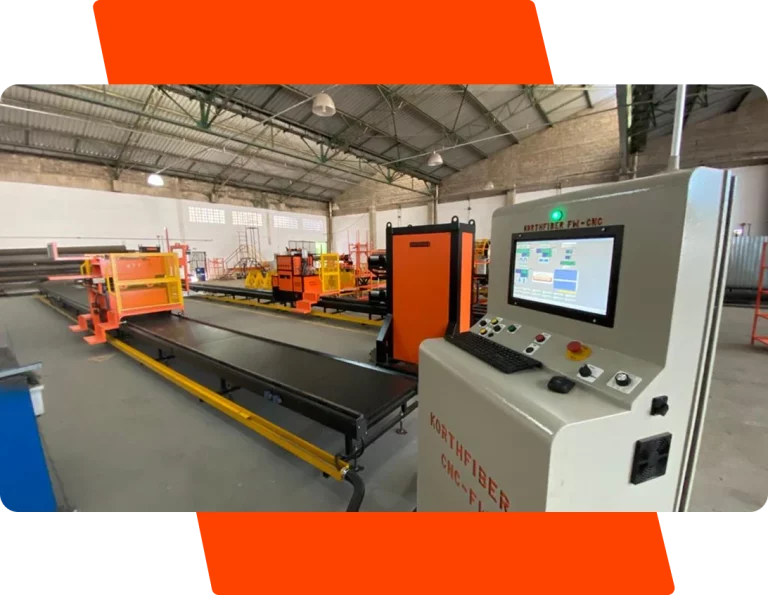
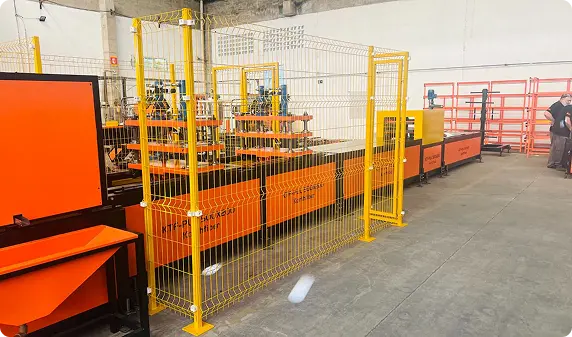
An industrial pultrusion line must ensure:
- Continuous, controlled feeding of the fibers;
- Uniform impregnation of the resin;
- Precise control of mold temperature;
- Uniform curing of the composite;
- Stable traction system;
- Automated, dimensionally precise cutting;
- Quality control at every stage of production.
When these factors are properly controlled, it is possible to produce profiles with high structural performance and industrial repeatability.
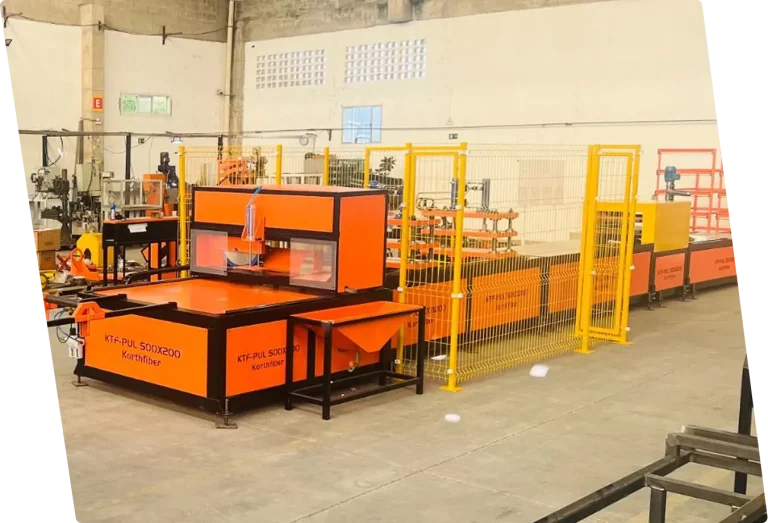
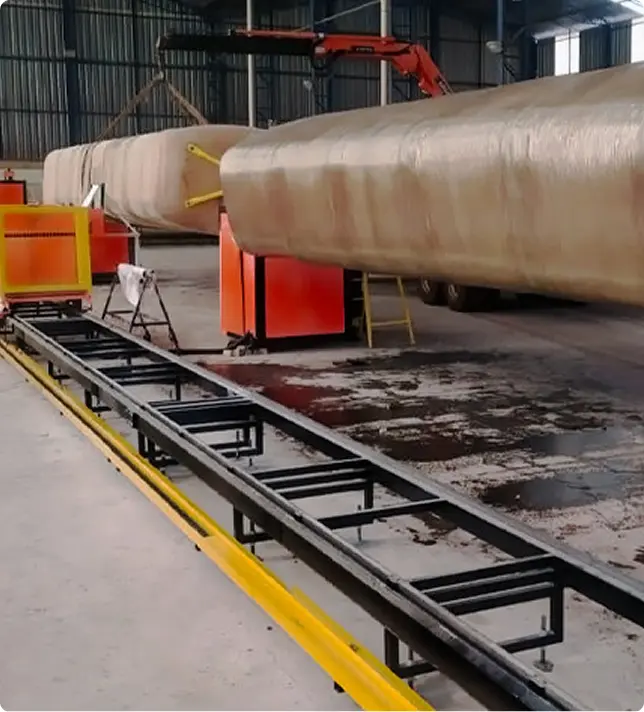
Pultrusion Technology for Large-Scale Production
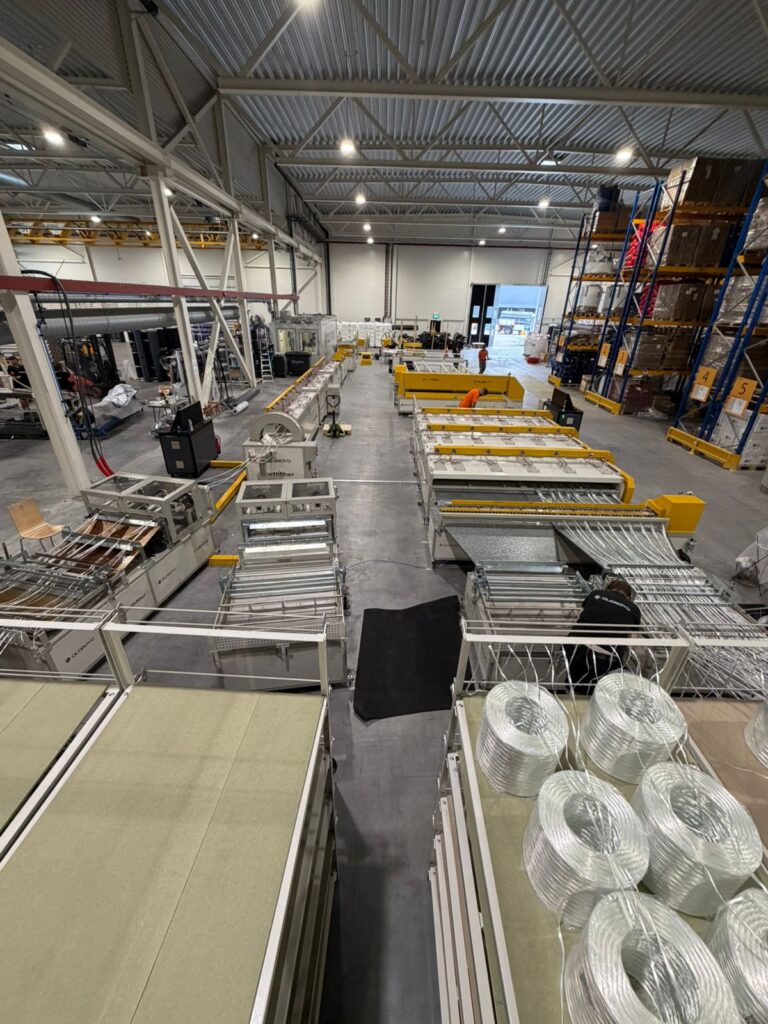
As demand for composite materials grows in sectors such as energy, infrastructure, sanitation, and industry, it becomes essential to have equipment capable of ensuring productivity, operational stability, and standardization.
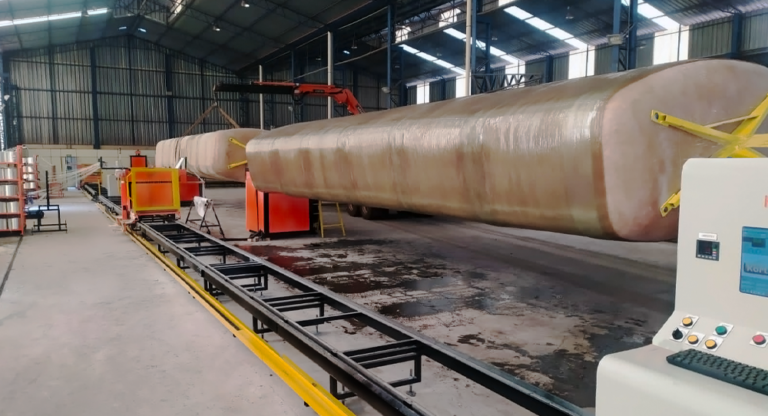
Modern pultrusion lines make it possible to increase production capacity, reduce waste, and ensure the quality needed to meet the demands of increasingly discerning markets.
Korthfiber: Solutions for the Production of Pultruded Profiles
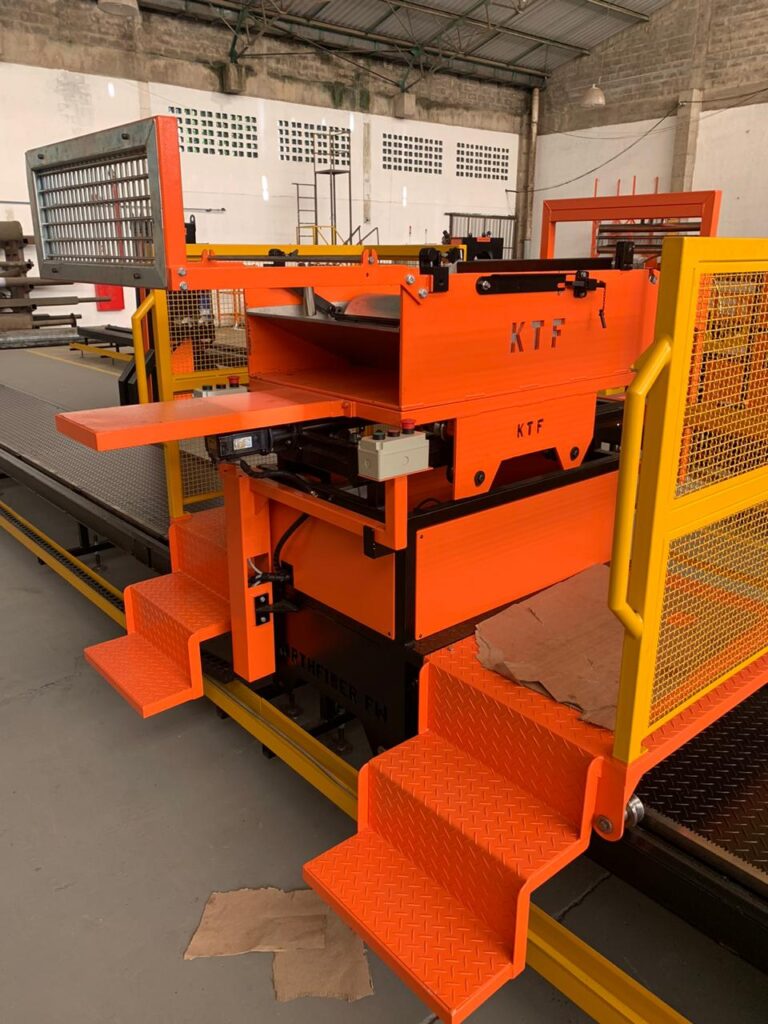
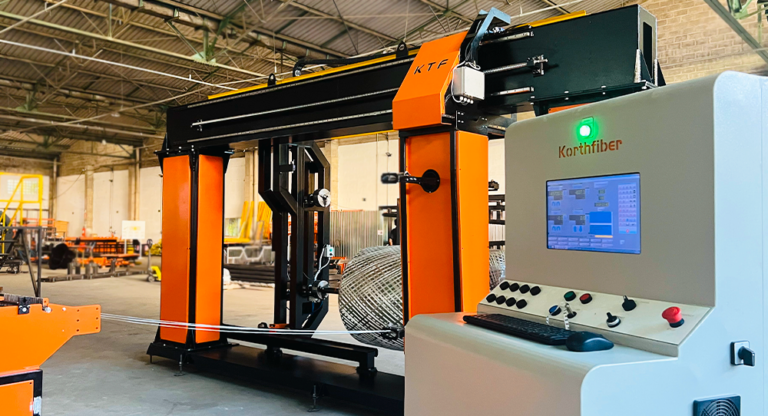
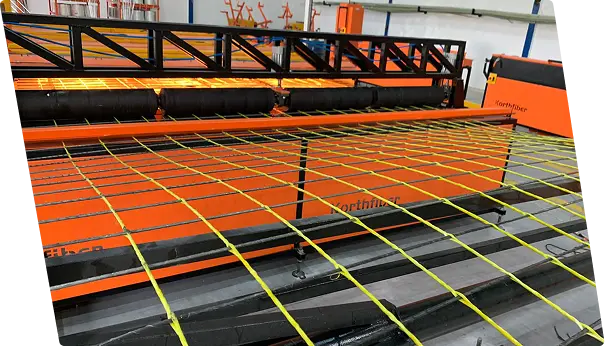
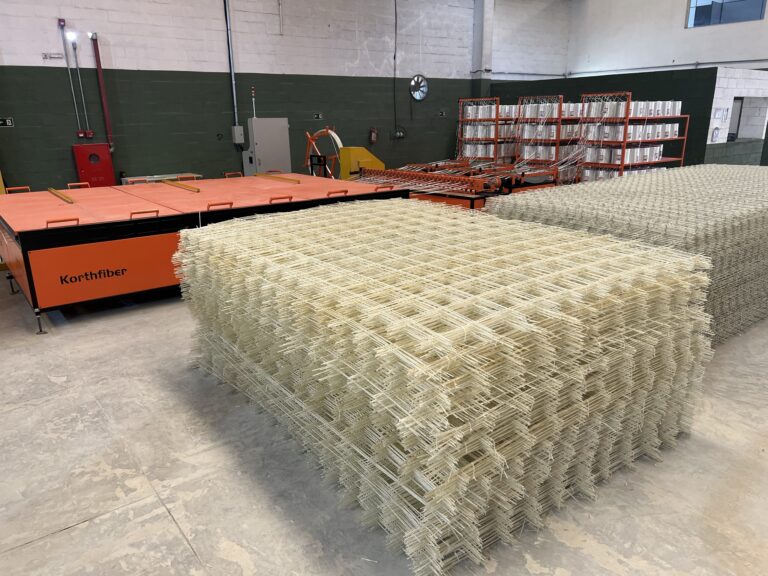
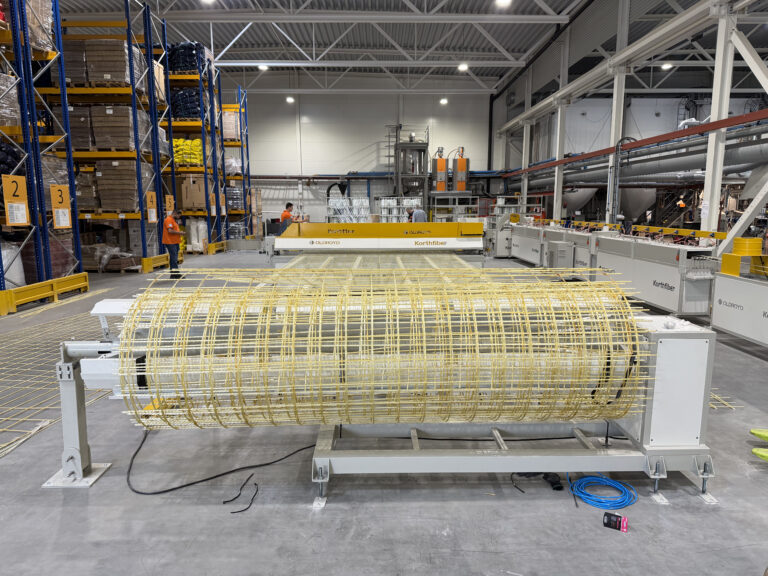
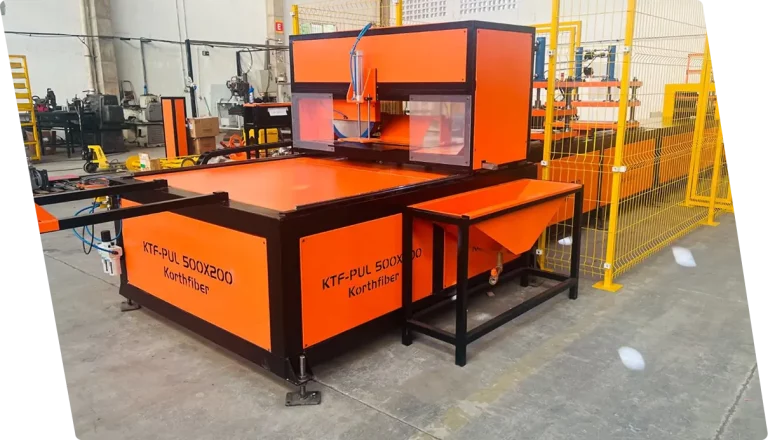
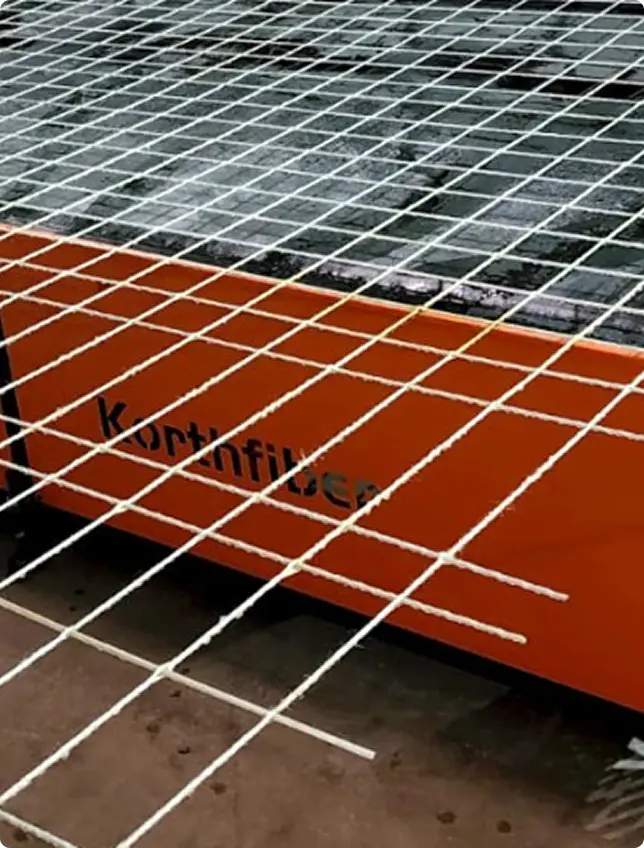
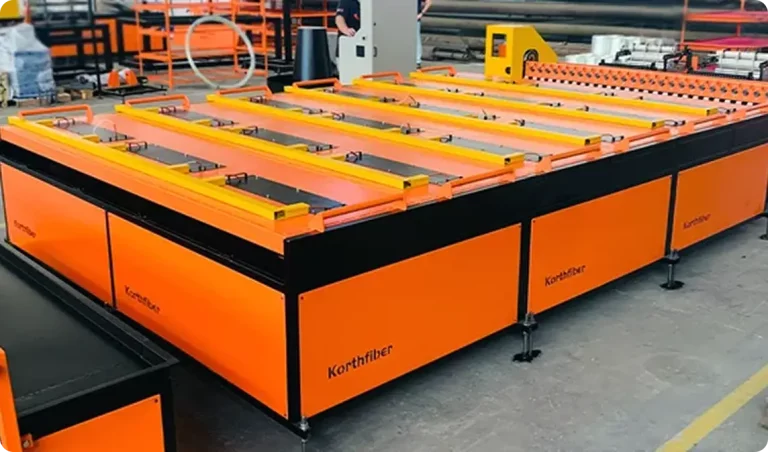
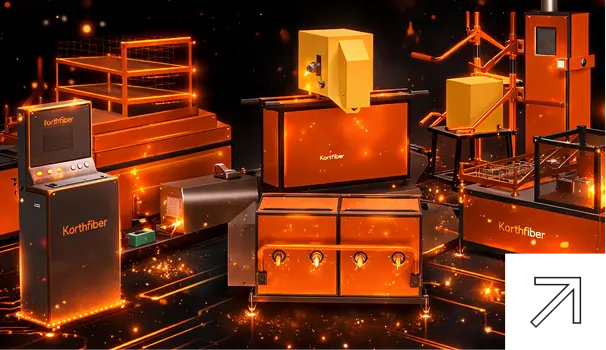
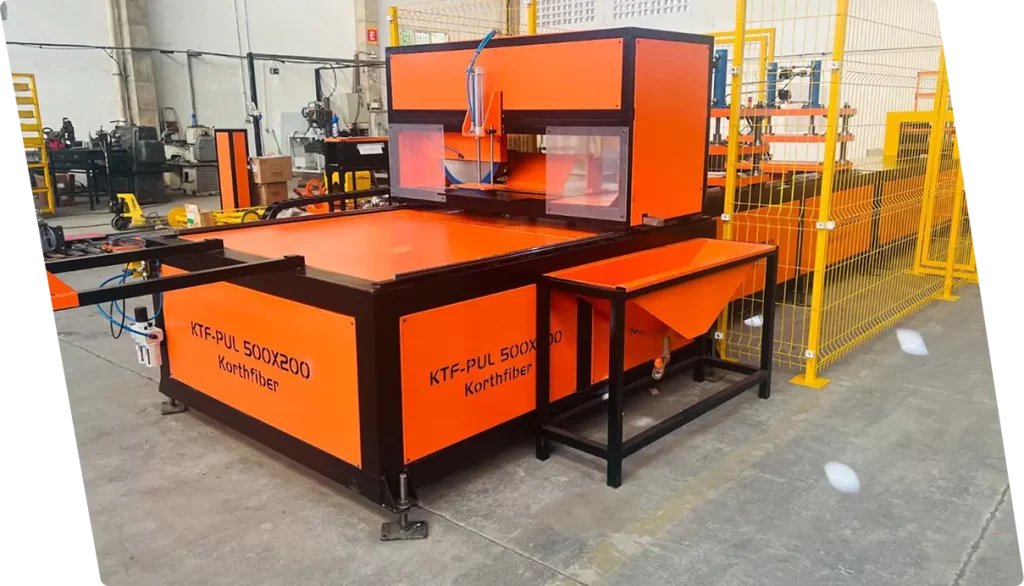
A Korthfiber develops pultrusion equipment designed for industrial operations that require high performance, reliability, and production scalability.
Its solutions are designed to provide process control, repeatability, and operational efficiency, helping manufacturers produce pultruded profiles that meet high-quality standards.
If your company is looking to establish or expand its production of fiberglass profiles, having the right technology is a crucial step toward increasing competitiveness and meeting the demands of a constantly evolving market.
Do you want to produce pultruded fiberglass profiles more efficiently and with greater consistency?
Contact the Korthfiber team and find out how to implement a production line equipped to meet the challenges of modern industry.