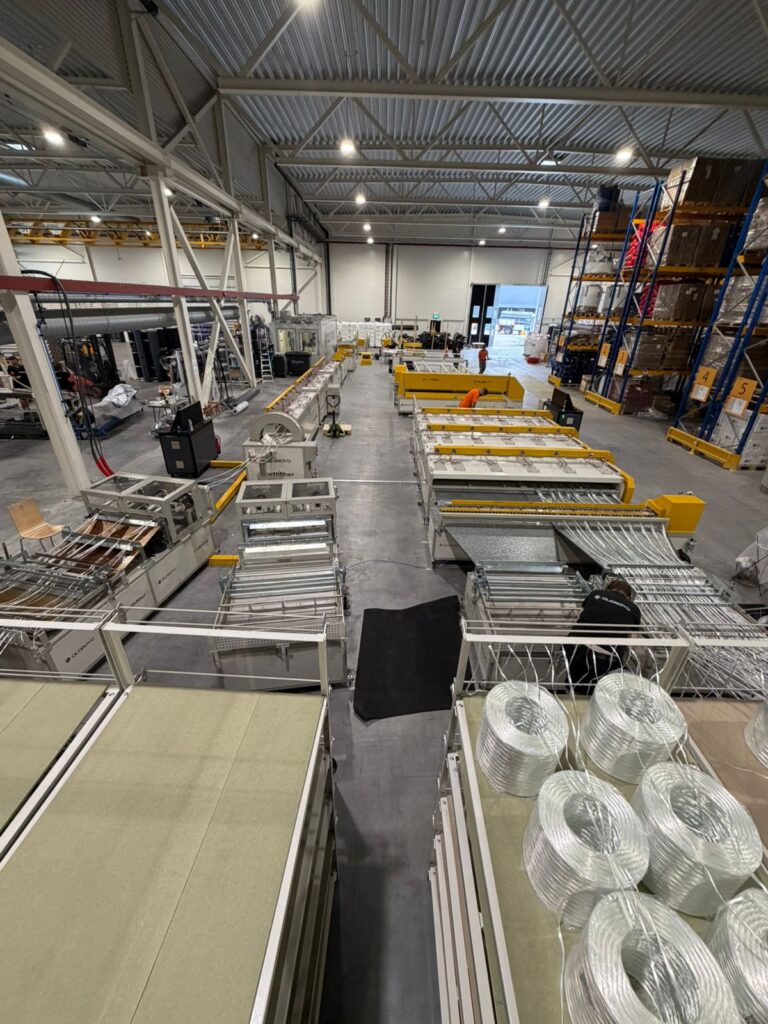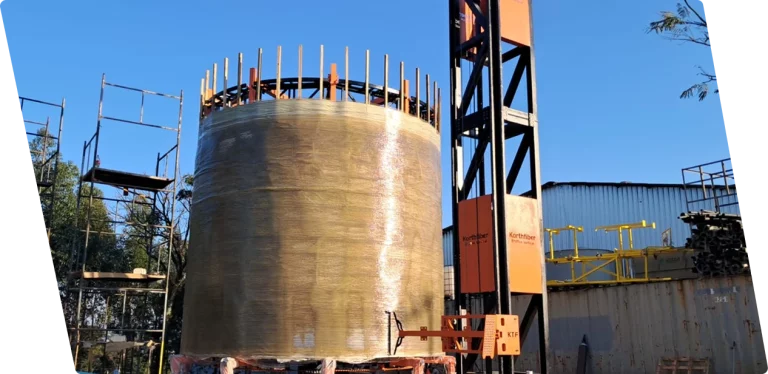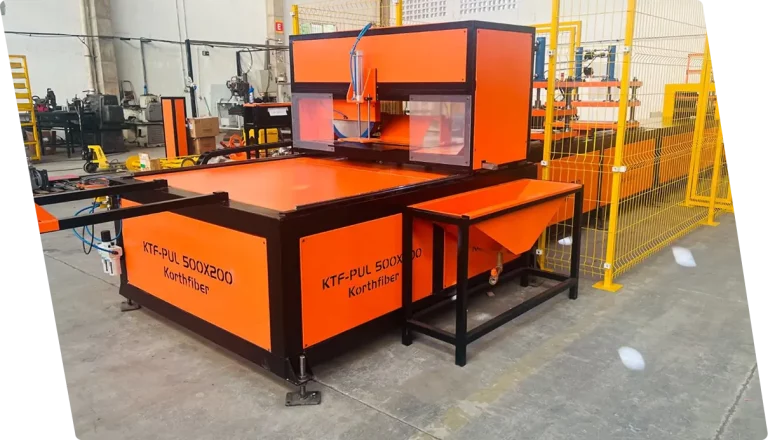

The search for stronger, lighter, and more durable materials has transformed various industrial sectors. Against this backdrop, pultrusion has become one of the most important technologies for manufacturing structural profiles made of fiberglass and composite materials.
Widely used in sectors such as construction, energy, sanitation, telecommunications, and the chemical industry, pultrusion delivers productivity, standardization, and high structural performance.
But what exactly is pultrusion? How does this process work in practice? And why are so many industries replacing traditional materials with composites manufactured using this technology?
What Is Pultrusion?
Pultrusion is a continuous process for manufacturing fiber-reinforced composite profiles—typically fiberglass—using thermosetting resins.
The name comes from a combination of the English words “pull” and “extrusion.” Unlike conventional extrusion, in which the material is pushed, in pultrusion the fibrous reinforcement is pulled through the production system.
The process makes it possible to manufacture parts with:
- High mechanical strength
- Excellent chemical resistance
- Low structural weight
- High durability
- Dimensional Standardization
Among the most common products are:
- Structural profiles
- Crossbars
- Industrial Ladders
- Railings
- Poles
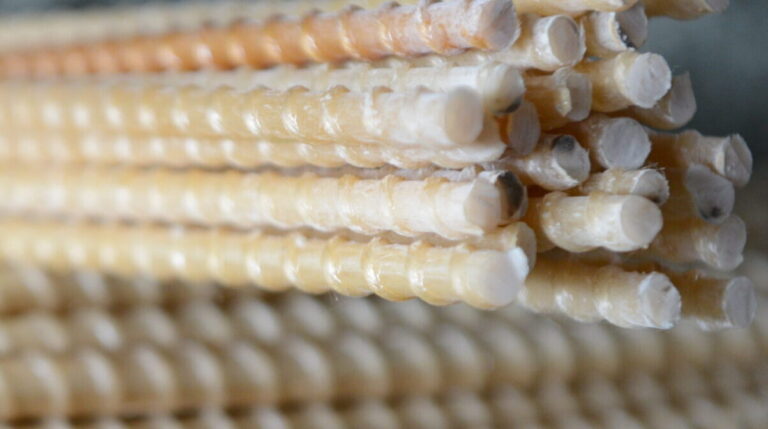
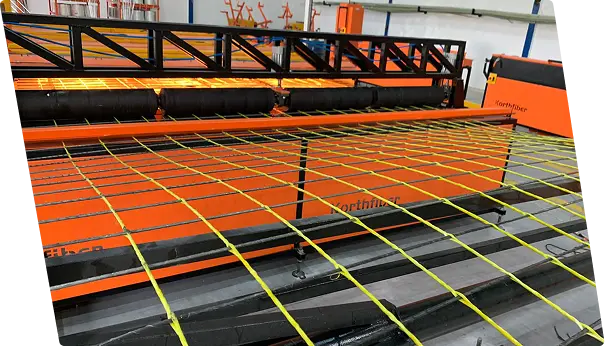
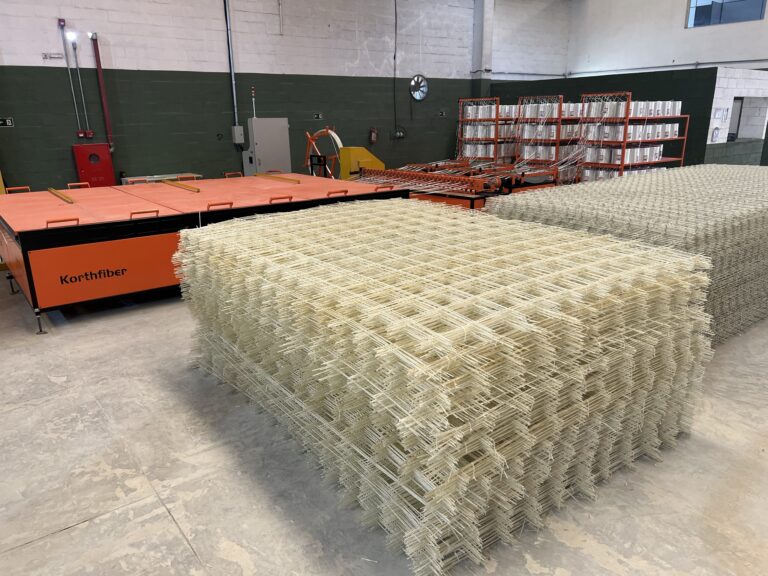
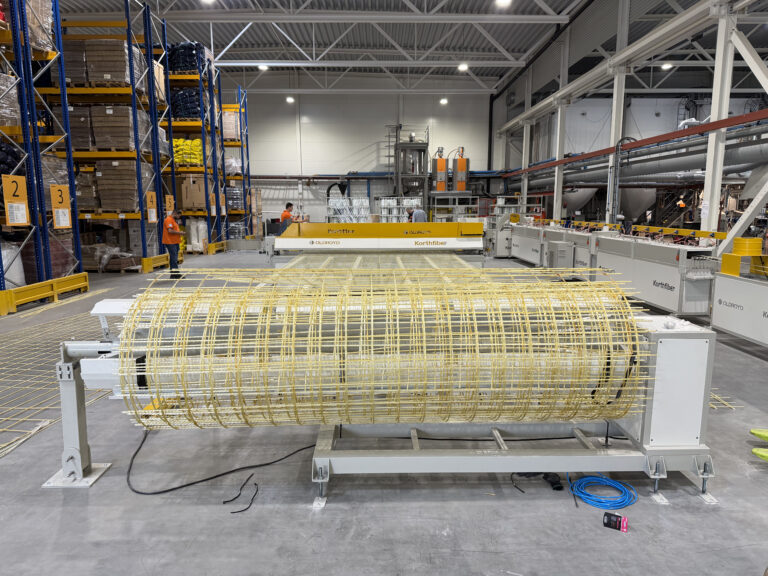
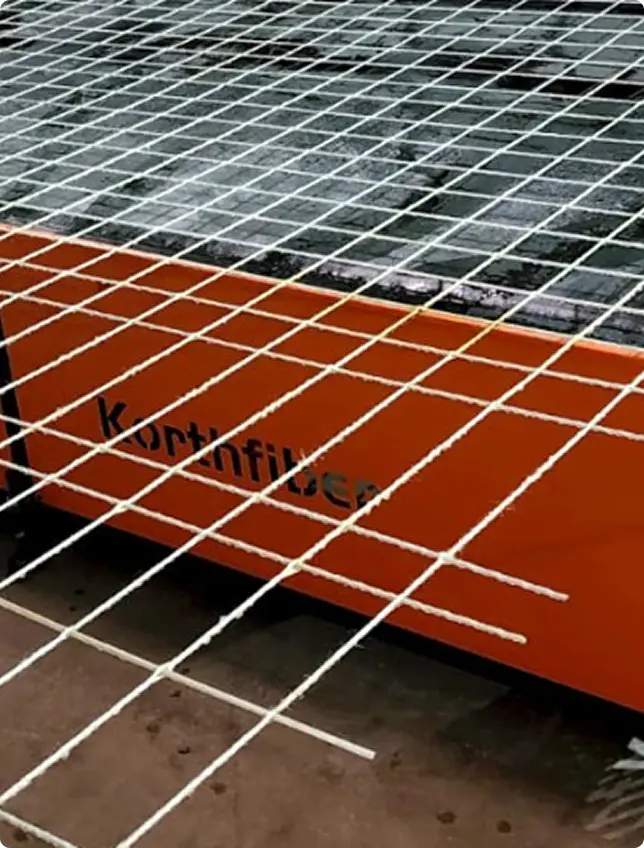
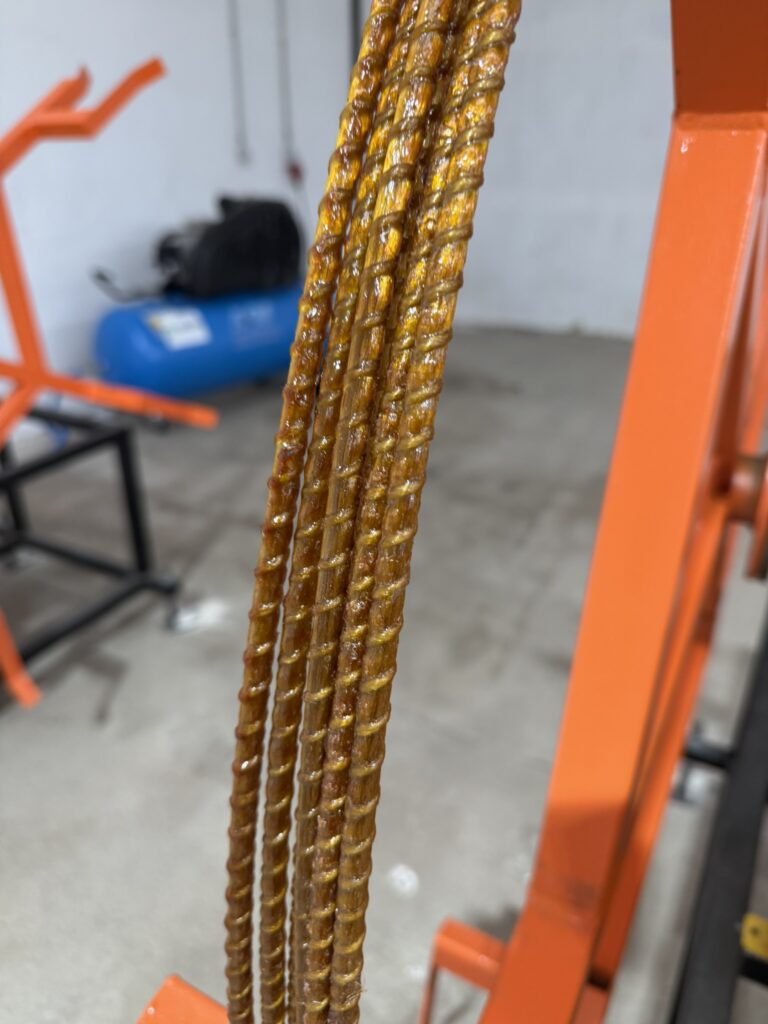
- GFRP Rebar
- Electrical and Industrial Components
How Does the Pultrusion Process Work?
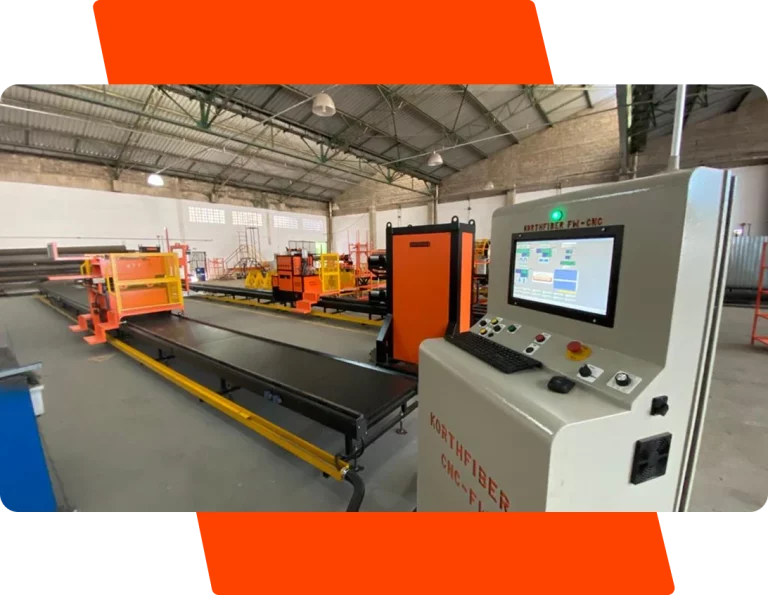
The pultrusion process is continuous and automated.
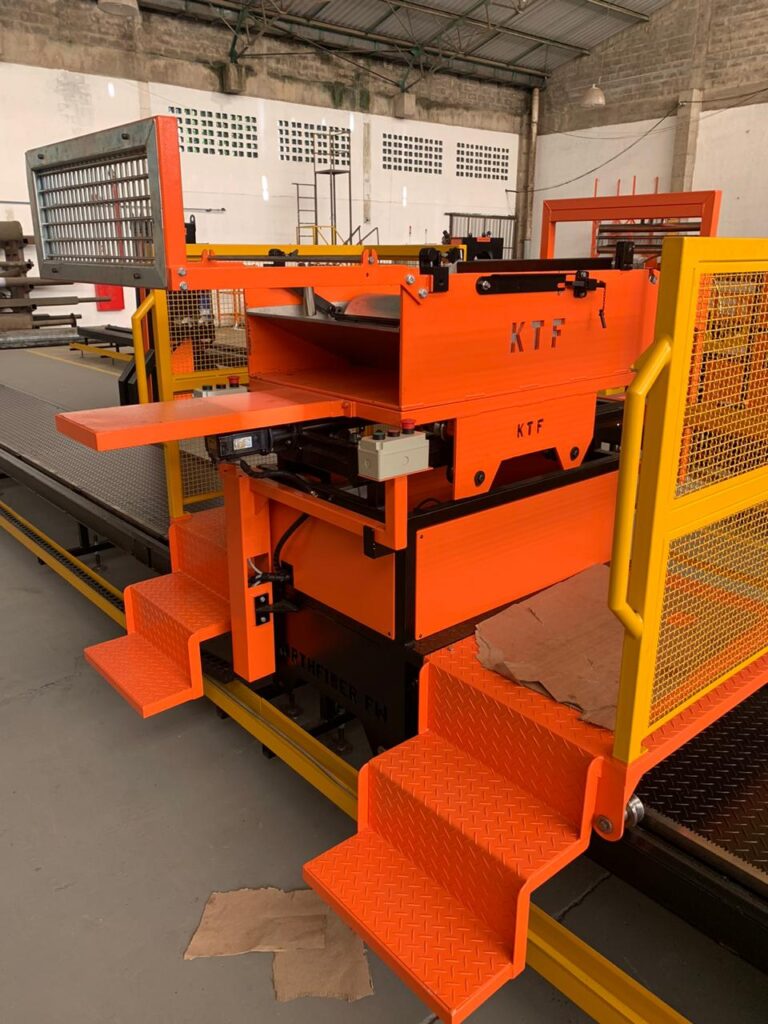
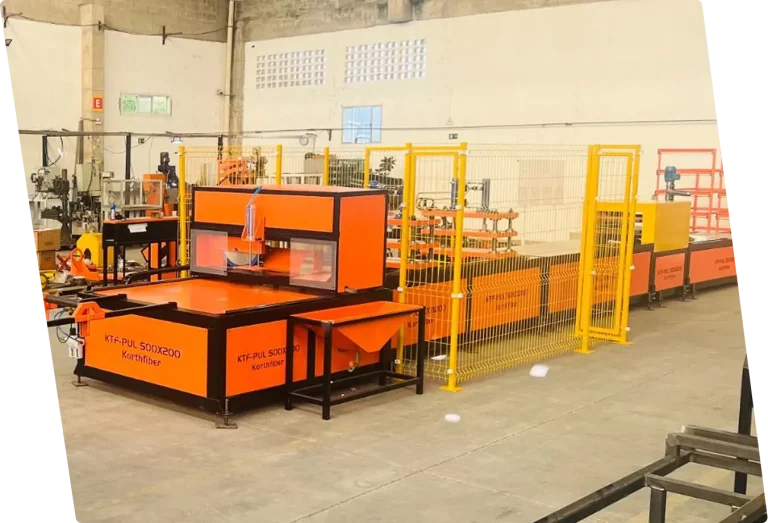
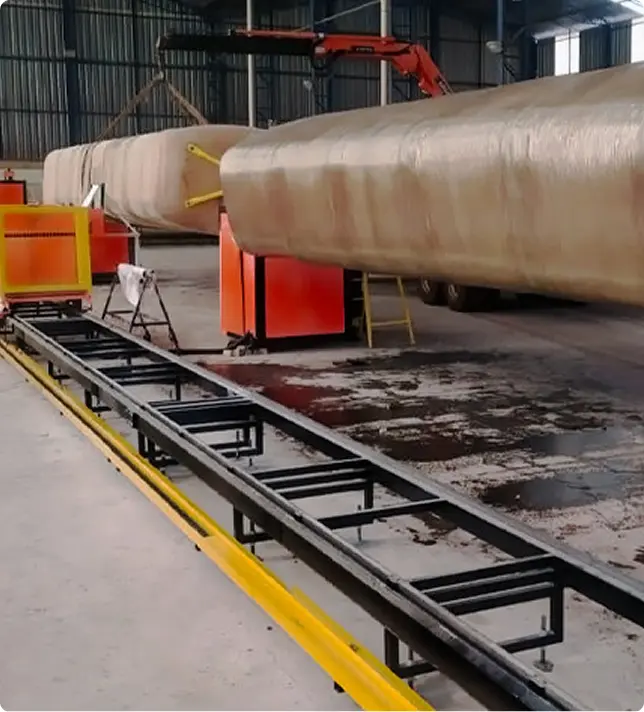
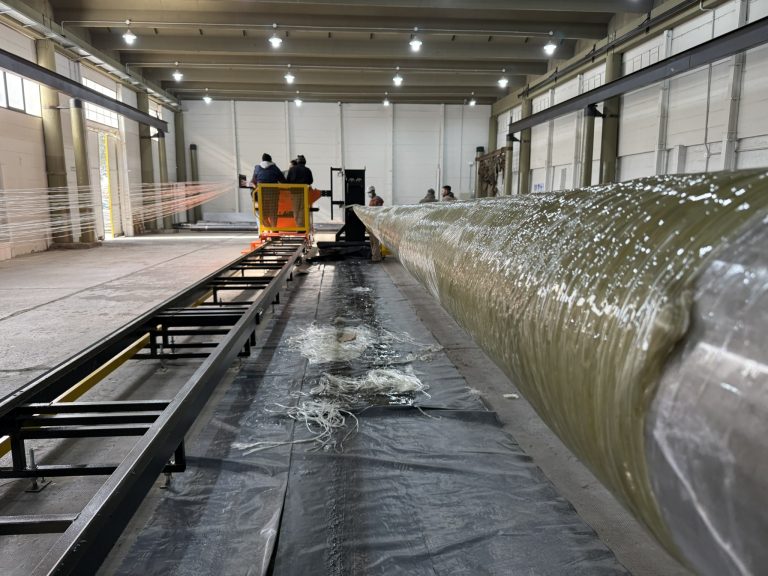
Basically, continuous fibers are impregnated with resin and pulled through a heated mold, where the material takes on the desired shape and undergoes structural curing.
Stages of the Process
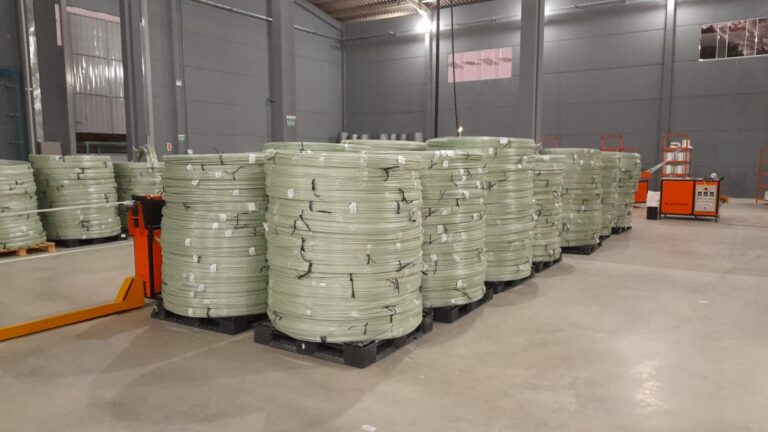
1. Fiber intake
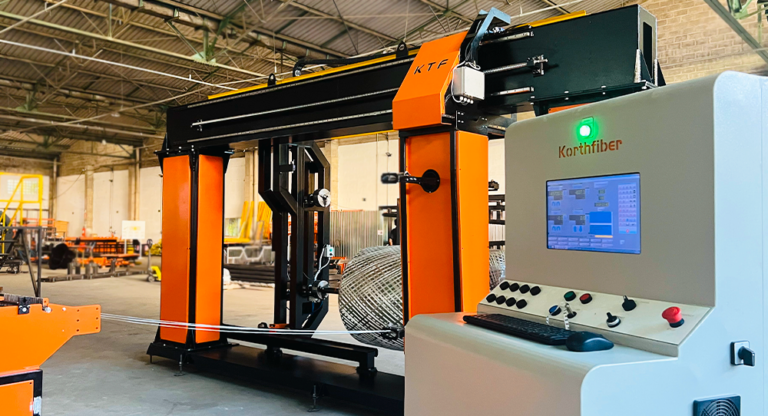
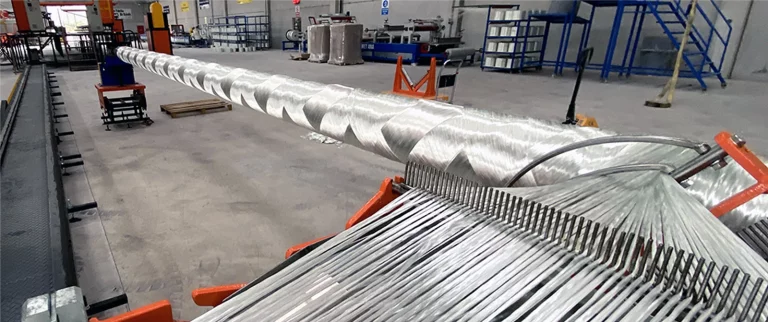
The glass fibers are wound onto reels and fed into the production line.
2. Resin impregnation
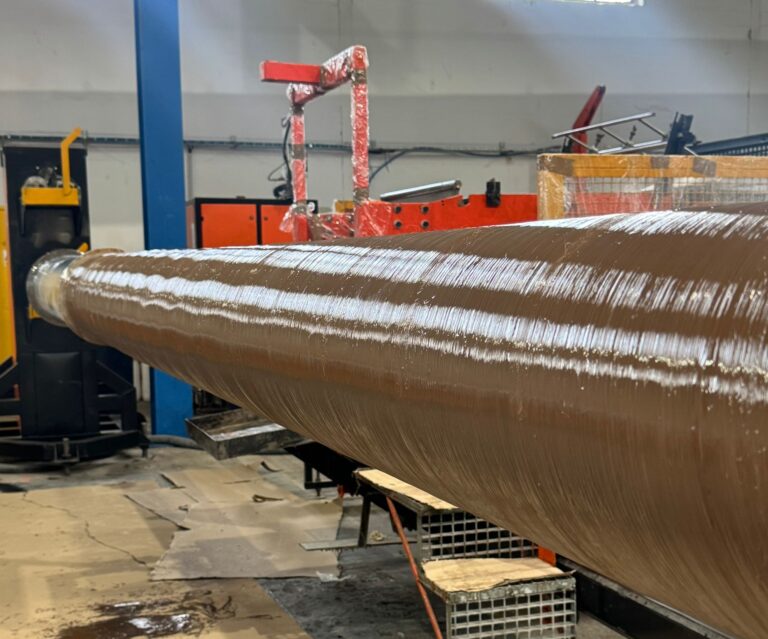
The fibers are dipped in resin, ensuring adhesion and structural strength.
3. Molding
The impregnated material passes through a heated mold that shapes the profile into its final form.
4. Heat curing
During the process, the resin undergoes polymerization.
5. Continuous traction
The drive system maintains a constant speed and dimensional stability.
6. Final cut
The profile is automatically cut to the programmed length.
Key Advantages of Pultrusion
Pultrusion has been growing globally precisely because it overcomes the limitations of traditional materials such as steel, aluminum, and wood.
High mechanical strength
Pultruded profiles offer excellent structural performance with low weight.
This enables robust applications without the need for overly complex structures.
Corrosion resistance
One of the greatest advantages of composites is their chemical resistance.
In harsh, industrial, or marine environments, materials produced by pultrusion have a much longer service life than conventional steel.
Low maintenance
Since they do not corrode, oxidize, or deteriorate rapidly, the components require less maintenance over the years.
Structural Lightness
Composites have a high strength-to-weight ratio.
This makes it easier to:
- transportation
- installation
- logistics
- field assembly
Electrical insulation
Fiberglass profiles are widely used in electrical applications precisely because they do not conduct electricity.
Industrial standardization
Process automation ensures repeatability and dimensional accuracy.
Where Is Pultrusion Used?
Technology is present in various industrial sectors.
Civil Construction
Applications:
- GFRP Rebar
- Anti-corrosion structures
- Structural profiles
- Stairs
- Runways
Energy
Commonly used in:
- crossbars
- poles
- insulating components
- structures for electrical grids
Sanitation and Chemistry
Chemical resistance makes pultrusion ideal for:
- corrosive environments
- treatment plants
- chemical industries
Telecommunications
The lightness and strength of composites make them ideal for use in infrastructure and technical support applications.
Pultrusion vs. Conventional Materials
| Feature | Fiberglass Pultrusion | Steel |
| Corrosion resistance | Discharge | Medium/Low |
| Weight | Bass | High |
| Maintenance | Reduced | Frequent |
| Electrical conductivity | Does not drive | Driver |
| Service life | High | Environment-dependent |
The Growth of the Composites Market
The global composites market continues to expand, driven by demand for:
- structural efficiency
- reduced maintenance
- sustainability
- greater industrial durability
Technologies such as pultrusion and filament winding are becoming strategic for industries seeking to increase productivity and competitiveness.
Why Invest in Pultrusion Technology?
Companies that invest in modern equipment are able to:
- increase production capacity
- improve the final quality
- reduce waste
- automate processes
- achieve industrial-scale production
In addition, demand for composite materials is expected to continue growing in the coming years.
Pultrusion has evolved from being merely an alternative technology to becoming a strategic solution in modern industry.
Thanks to their combination of strength, lightness, durability, and productivity, composite materials are becoming increasingly popular in industrial and structural applications.
Companies that keep pace with this technological transformation are able to produce more efficiently, with less maintenance, and with greater competitiveness.
Would you like to understand how pultrusion technology can transform your industrial operation?
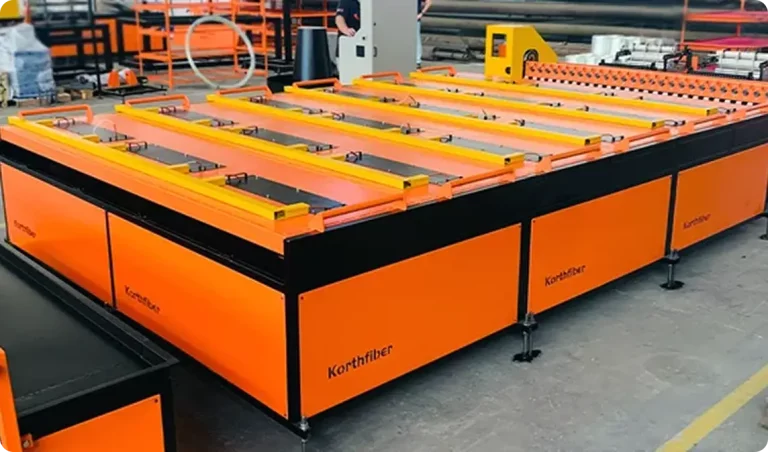
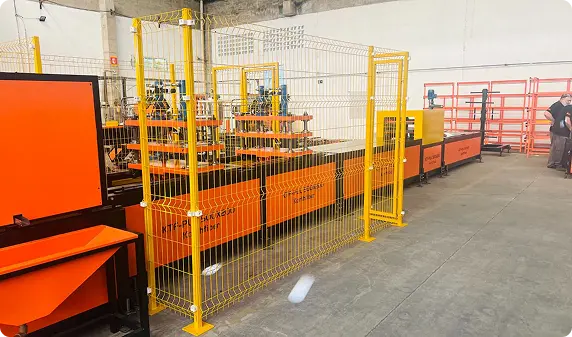
A Korthfiber develops advanced solutions in machinery and technologies for the manufacture of fiberglass composites, offering high performance, automation, and industrial productivity.
Contact us to find out which solution makes the most sense for your project.