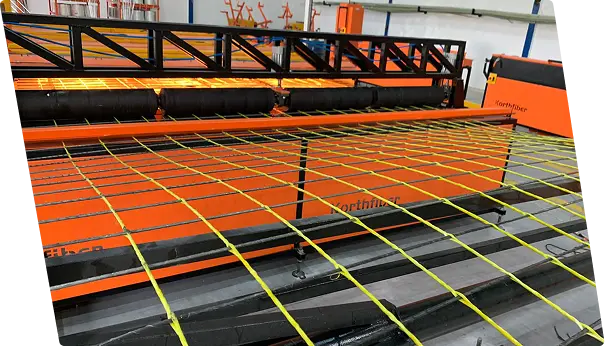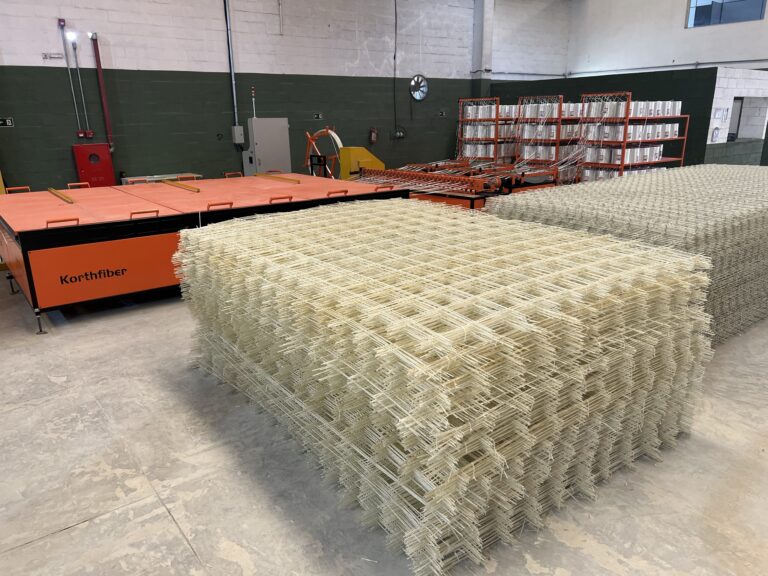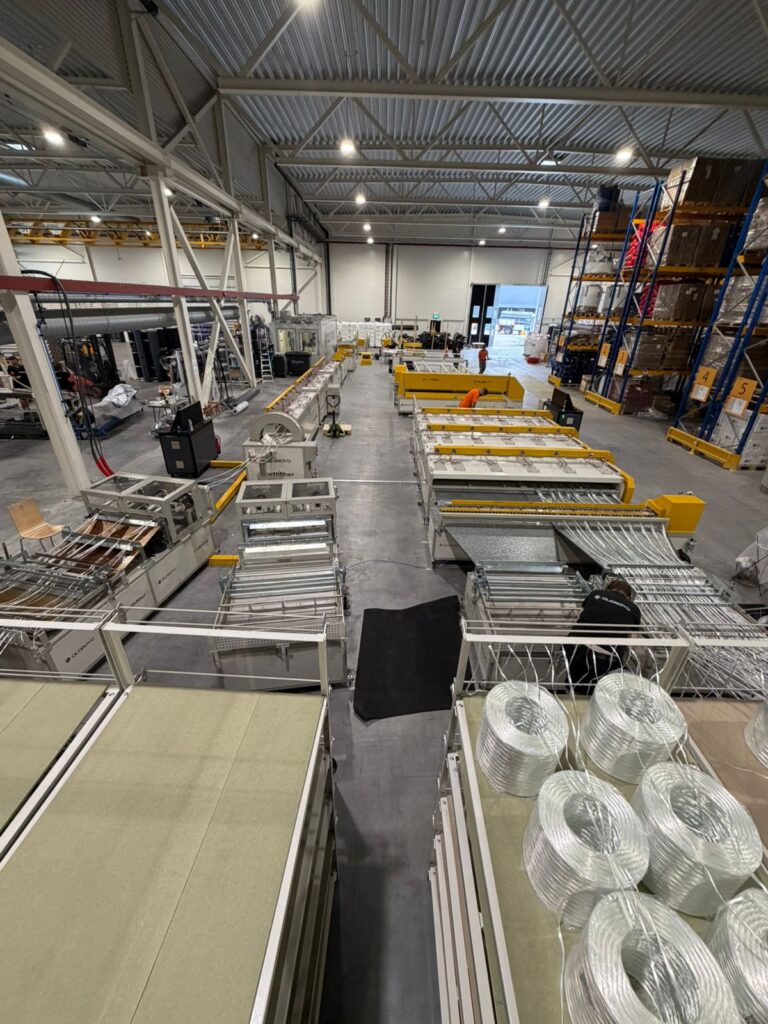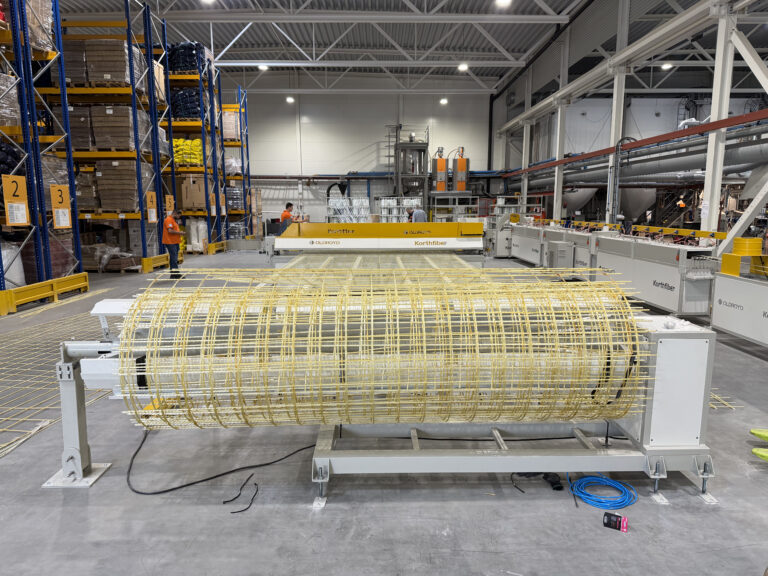


Choosing the right technology is one of the most critical factors for the success of an operation in the composites industry. Among the main production processes, two stand out for their efficiency and strategic application: pultrusion and filament winding.
But ultimately, which one makes the most sense for your project?
Understanding Pultrusion
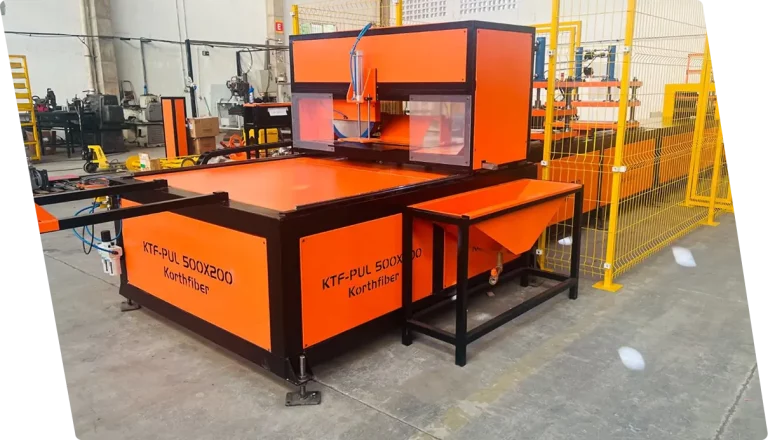
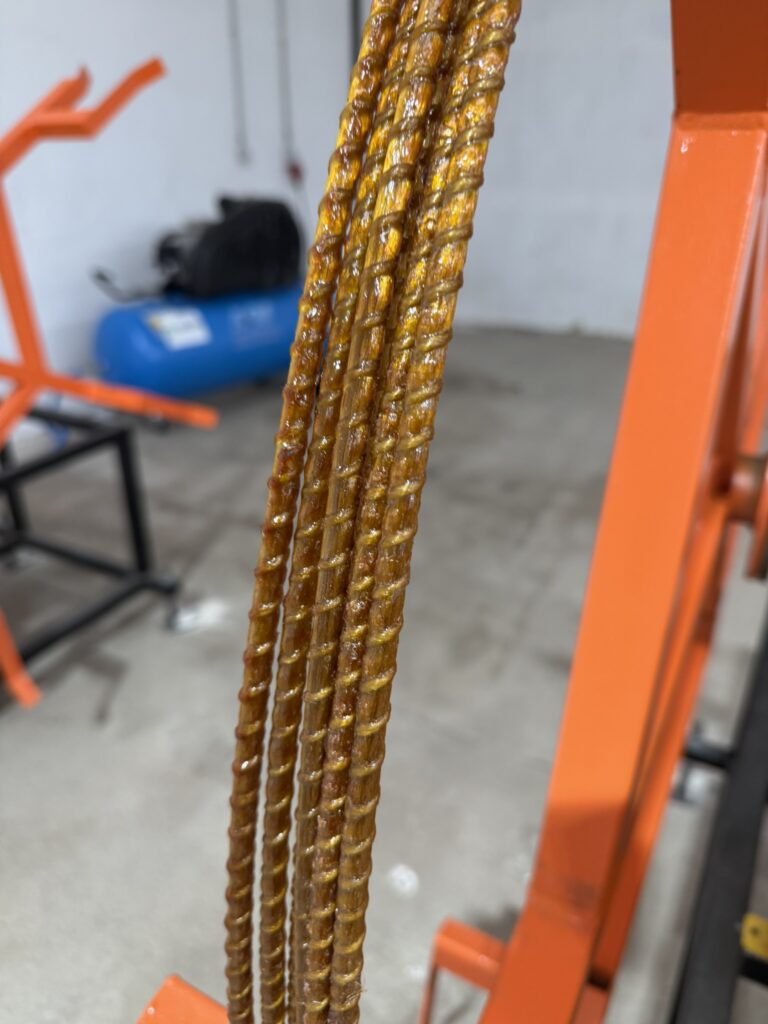
Pultrusion is a continuous process used to manufacture structural profiles with a constant cross-section. Fibers are impregnated with resin and drawn through a heated mold, ensuring dimensional accuracy and industrial repeatability.
Main applications:
- Structural profiles
- Crossbars
- Guardrails
- Industrial Ladders
- Technical Reinforcements
Advantages:
- Continuous production
- High standardization
- Excellent mechanical strength
- Large-scale efficiency
Pultrusion is ideal for those seeking high volume, consistency, and cost optimization per meter produced.
Understanding Filament Winding
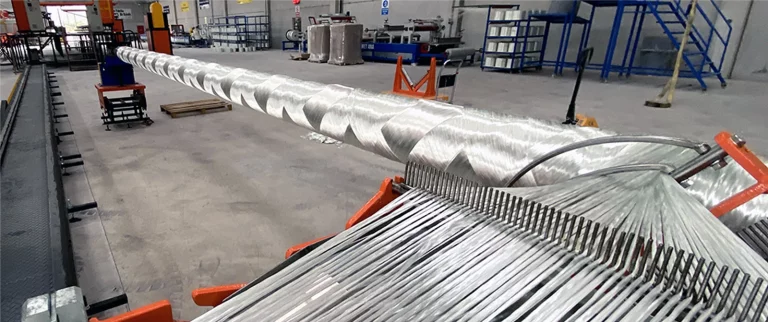
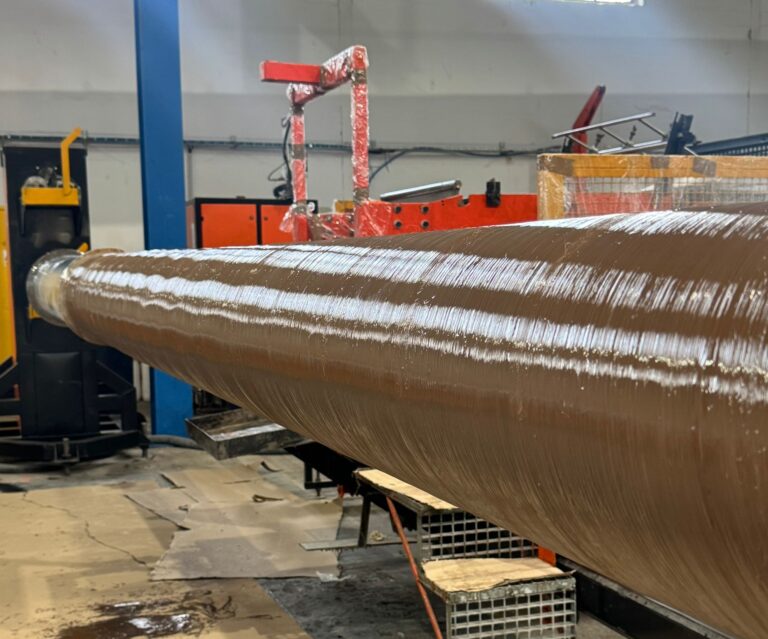
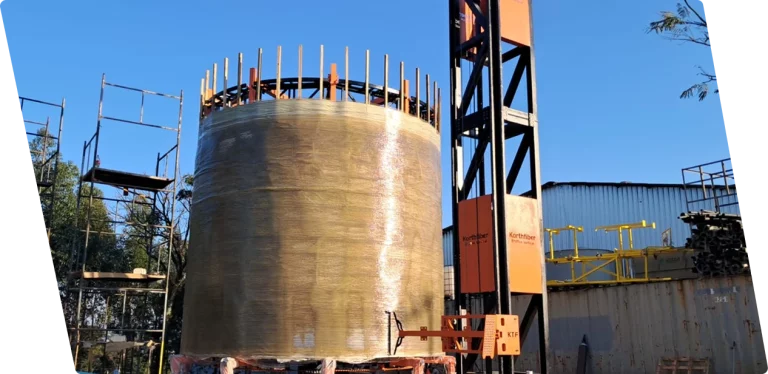
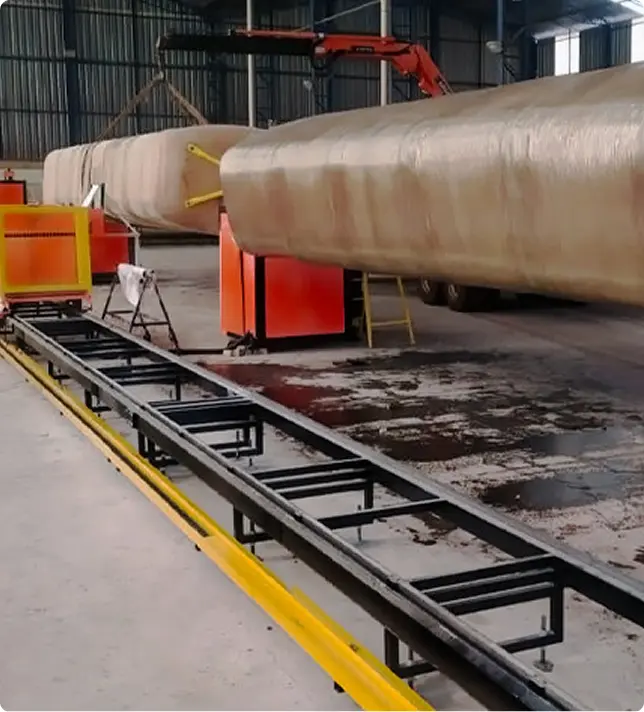
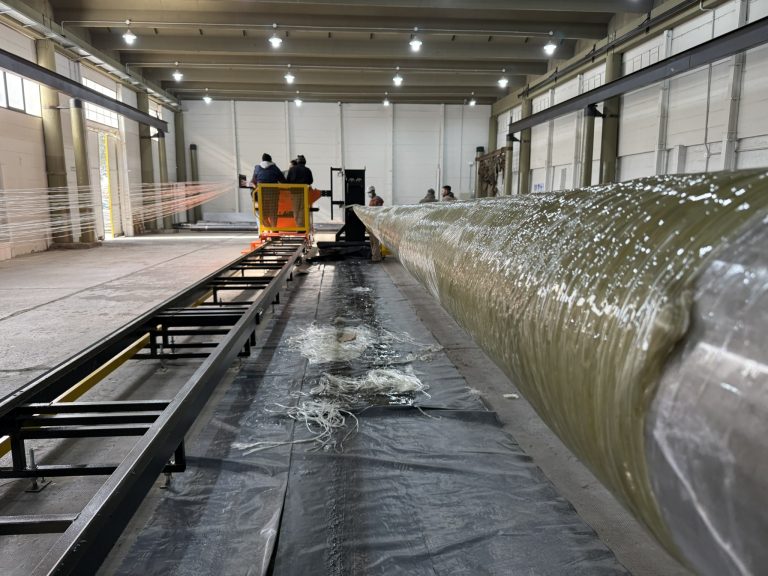
Filament winding is suitable for the production of circular structures. The process involves the controlled winding of resin-impregnated fibers around a mandrel, forming highly resistant structures.
Main applications:
- Industrial tanks
- Pipes
- Poles
- Pressure vessels
Advantages:
- High resistance to internal pressure
- Excellent chemical performance
- Structural control of fiber orientation
- Superior durability
It is the most suitable technology for applications that require resistance to pressure and harsh environments.
How to Choose the Right Technology?
The decision depends on three main factors:
- Type of final product
- Production scale
- Technical Requirements for the Application
Companies that properly organize their production lines are able not only to produce high-quality products but also to gain a competitive edge in the market.
Technology Is Strategy
Investing in the right equipment is not just an operational decision—it is a strategic one. The right choice has a direct impact on productivity, quality, and market positioning.
The composites industry continues to expand globally, and technically capable companies are taking the lead in this landscape.